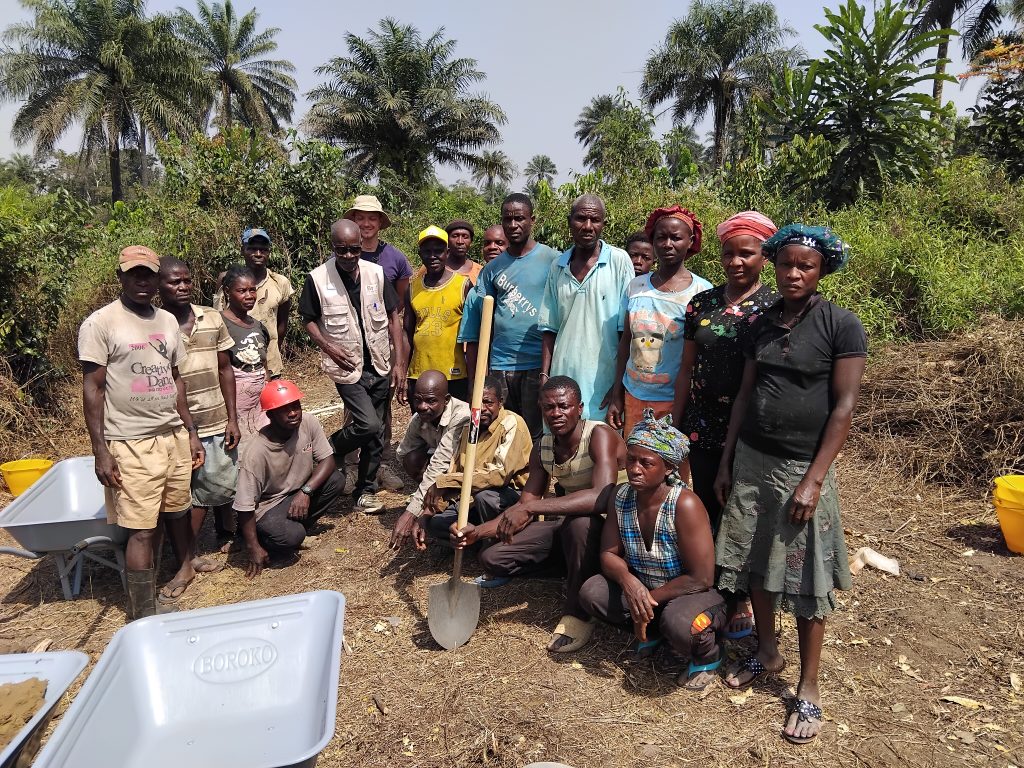
Dr. Joost Koks’ visit to Liberia marked an important moment of learning, exchange, and shared commitment to climate resilience at the community level. His journey to Kpaiyea Town offered him a firsthand look at how locally driven initiatives are transforming livelihoods and strengthening adaptation to climate change.
Upon arrival at the climate adaptation project site, Dr. Koks was warmly received by members of the men’s and women’s groups who are actively engaged in the initiative. Their enthusiasm and sense of ownership reflected the community’s determination to respond to the environmental challenges affecting their farming and water resources. The project, supported through funding from ACT Alliance and the World Association for Christian Communication (WACC), is designed to help farmers adapt to changing rainfall patterns and improve agricultural productivity throughout the year.
During the visit, Project Manager Samuel Flomo provided a detailed overview of the ongoing activities. He explained that one of the central components of the project involves developing the swamp area to serve as a reliable water storage system. This intervention is intended to ensure that farmers have access to water beyond the rainy season, enabling continuous production and reducing vulnerability to drought and unpredictable weather patterns. As part of this effort, community members are constructing a water catchment with reinforced, high banks capable of holding significant volumes of water for long-term use.
Dr. Koks observed the work with great interest and took time to engage directly with the farmers. Through open and lively discussions, he emphasized the value of collective action, encouraging the groups to continue working together in unity. He noted that community cooperation not only strengthens project outcomes but also builds resilience, shared responsibility, and long-term sustainability.
The interaction between Dr. Koks and the farmers created a meaningful space for dialogue, where knowledge, experience, and hope were exchanged. The visit highlighted the power of locally led climate solutions and reinforced the importance of partnerships that support communities in shaping their own adaptive futures.
By the end of the visit, it was clear that the Kpaiyea Town project stands as a strong example of grassroots climate adaptation in action, driven by community leadership, supported by committed partners, and inspired by a shared vision for sustainable livelihoods.